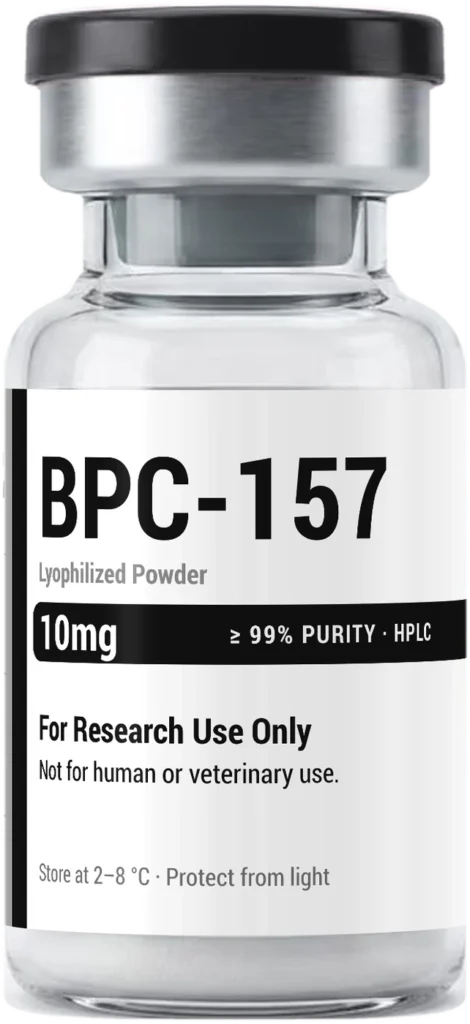
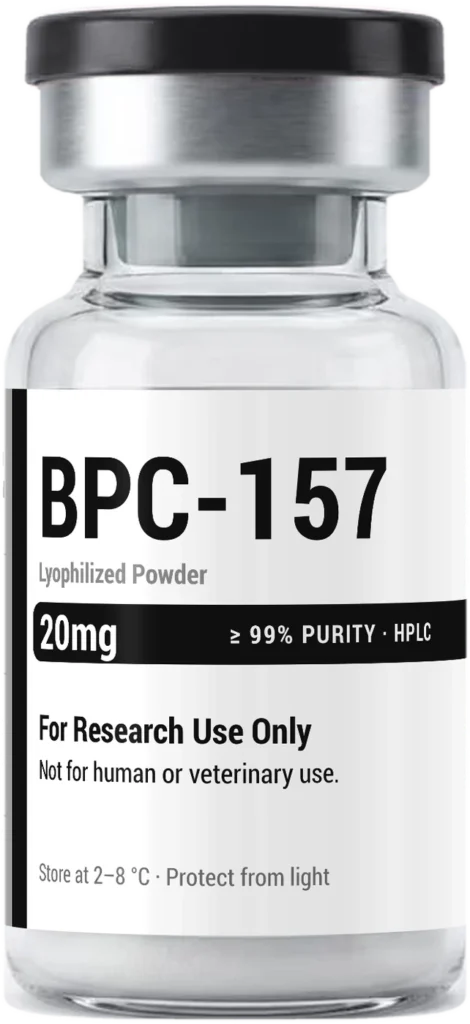
Vial label design and print may vary between batches. Product specifications remain unchanged.
At a glance
Strength
10mg per vial
Form
Lyophilised powder
Purity
≥ 99% (HPLC)
CAS number
137525-51-0
Molecular weight
1419.54 g/mol
Certificate of Analysis
Batch BC-10-03 · Prime Peptides UK
Tissue & repair
BPC-157
Synthetic research peptide · 10mg · CAS 137525-51-0
£24.95 In stock · ready to shipper vial · £2.50 per mg
Choose strengthPrice per vial
BPC-157 10mg is coming soon. It goes on sale as soon as its batch certificate is published - every vial we sell has a matching CoA.
Bank transferBitcoin Encrypted checkout · card details are never taken on this site
Multi-item discount. Add any 2 items for 4% off the whole order, 7% at 3, 10% at 4. Applied automatically at checkout.
Part of a stack. BPC-157 is in the Recovery & Repair Stack (BPC-157 10mg · TB-500 10mg · KPV 10mg).
Free
Free lab add-on. Bacteriostatic water is included with every peptide order at no extra cost.
Lab essentials tap to add to this order
RUOResearch Use Only. Not for human or veterinary use. By purchasing you confirm you are a qualified researcher and accept responsibility for safe, lawful handling.
Same-day dispatch
Orders before 3:00 PM leave the same working day, tracked, in plain packaging. Free UK delivery over £200.
Secure payment
Bank transfer or Bitcoin over an encrypted checkout. No card details are stored or handled on this site.
Batch tested
Every batch is HPLC and mass spectrometry tested, and its certificate is published before it ships.
BPC-157 10mg≥99% HPLC · In stock
£24.95
Compound Overview
What Is BPC-157 10mg?
BPC-157 is an experimental peptide supplied as a defined quantity of research material for laboratory use. Composed of 15 amino acids, BPC-157 has been investigated primarily in preclinical studies examining gastrointestinal biology, vascular signalling, cellular pathways and tissue-response models.
The compound is the synthetically produced pentadecapeptide, which comprises 15 amino acid units. The peptide BPC-157 sequence consists of GEPPPGKPADDAGLV, and its molecular formula, according to PubChem, is C62H98N16O22, with an estimated molecular weight of 1419.5 g/mol.
Thus far, the studies related to the substance have mainly focused on the biological processes associated with the gastrointestinal tract, vascular signalling, and tissue response models. Although those areas of study are extensively explored, these results cannot be treated as evidence of effects in humans.
BPC-157 is supplied in 10mg and 20mg vials. The vial size states the quantity of research material only; it is not a dose.
Sizes & Prices
BPC-157 sizes and prices
Each size is supplied from its own tested batch with its own Certificate of Analysis. The size is the amount of research material in the vial; larger vials cost less per mg.
Size
Price
Per mg
Batch certificate
Choose
10mg
£24.95
£2.50
BC-10-03
20mg
£39.95
£2.00
BC-20-03
Technical Data
BPC-157 Product Specifications
Technical Specification Sheet
BPC-157 · RUO
Product
BPC-157 10mg
Compound
BPC-157
Sequence
GEPPPGKPADDAGLV
Strength
10mg, 20mg per vial
Peptide length
15 amino acids
Molecular formula
C62H98N16O22
Molecular weight
Approx. 1419.5 g/mol
Classification
Experimental research peptide
Documentation
Batch-specific Certificate of Analysis with every batch
Intended use
Laboratory and scientific research only
CAS Number
137525-51-0
Purity
≥99% by HPLC
Product-specific storage, testing and handling information should always be checked against the documentation accompanying the relevant batch.
The Science
Scientific Background of BPC-157
BPC-157 is commonly described in scientific literature as a stable gastric pentadecapeptide. Much of the published research has investigated the compound in experimental systems rather than controlled human clinical studies.
Researchers have explored BPC-157 in relation to several biological processes. Published preclinical work includes investigations involving gastrointestinal experimental models, angiogenesis-related signalling, nitric-oxide-associated mechanisms and responses studied in tendon, ligament, muscle and bone models.
These findings explain why BPC-157 continues to be investigated as an experimental compound, but they do not establish clinical effectiveness.
This distinction is particularly important when reviewing online information about BPC-157. Results observed in cells, laboratory models or animals cannot automatically be applied to people. Variables including experimental conditions, concentration, model selection and study design can substantially influence research outcomes.
Accordingly, BPC-157 should be presented as an investigational research peptide, with its scientific relevance evaluated through the quality and limitations of the available evidence rather than therapeutic claims.
Laboratory Focus
Why Is BPC-157 Studied in Laboratory Research?
One reason BPC-157 has received scientific attention is the range of experimental systems in which researchers have examined its biological activity.
Receptor Signalling
Gastrointestinal research has formed an important part of the published literature, with investigators studying responses in experimental models involving the stomach and other areas of the gastrointestinal tract. Separate preclinical studies have explored processes associated with vascular signalling and angiogenesis.
Inflammatory Signalling
Research involving musculoskeletal models has also examined BPC-157 in experimental settings concerning tendons, ligaments, muscle and bone. Other investigations have considered interactions involving inflammatory signalling and cellular pathways.
Laboratory Research
These research areas should be understood as subjects of scientific investigation rather than established uses for BPC-157.
Preclinical Models
The existing evidence base remains heavily weighted towards preclinical work. Consequently, laboratory findings should be described according to the experimental model in which they were observed. Responsible interpretation requires consideration of study design, replication, methodology and the difference between experimental observations and validated clinical outcomes.
Product Format
Understanding the 10mg BPC-157 Research Format
10mg
Nominal Research Quantity
The 10mg designation describes the amount of peptide material supplied in the product format. It does not indicate a clinical dose, recommended administration quantity or level of effectiveness.
Research peptides may be offered in different material quantities because laboratory requirements are not identical across projects. A researcher planning several analytical procedures, for example, may have different material requirements from a laboratory performing a smaller exploratory assay.
Experimental design, number of planned analyses, study scale, analytical methodology and laboratory protocol can all affect the quantity of research material required.
The purpose of identifying the product clearly as BPC-157 10mg is therefore to help laboratories understand the quantity being sourced and use that information for procurement and experimental planning.
Researchers should calculate material requirements according to validated laboratory procedures and their institution's own protocols. The presence of a 10mg format should never be interpreted as guidance for human or veterinary administration.
Verification
Quality Testing, Purity and Certificate of Analysis
Analytical documentation is an important consideration when sourcing BPC-157 10mg research material because researchers need to verify that the material received corresponds with the stated product identity.
Batch-Specific CoA
A Certificate of Analysis (COA) can provide batch-associated analytical information. Depending on the testing performed, documentation may include product identification, batch reference, analytical method and reported test results.
HPLC Analysis
High-performance liquid chromatography (HPLC) is frequently used in peptide analysis to assess sample composition and chromatographic purity. However, HPLC purity and confirmation of molecular identity are different analytical questions. Researchers should therefore examine what testing has actually been performed rather than relying solely on a headline purity figure.
Documentation & Transparency
Batch traceability is also important. Linking analytical documentation to a specific batch allows laboratories to retain relevant records alongside experimental data.
Testing statements should always correspond with the actual documentation available for the supplied batch; purity percentages or analytical methods should never be assumed.
Handling
Storage and Laboratory Handling
Laboratory Research
Peptide research materials should be handled within a controlled laboratory setting using methods appropriate to the material and experiment.
Environmental Conditions
Scientists should refer to the manufacturer's documentation for recommended storage conditions for BPC-157 10mg. Factors such as temperature, humidity, prolonged light exposure and environmental changes may affect peptide stability.
Contamination Control
The material should be kept properly labelled and protected from contamination, and batch identification preserved where traceability is necessary.
Documentation First
Laboratories should follow their established standard operating procedures. In case batch-specific literature indicates more exact conditions, those instructions should take precedence over general storage recommendations. These recommendations concern material management in laboratories only and do not provide preparation or administration guidance.
Scientists looking at suppliers of BPC-157 10mg should look beyond the name of the substance offered on a web site.
Identification of the compound and the amount supplied should be complemented with relevant information about testing, batch certification, storage and research purpose. Where a COA is provided, scientists should be able to establish its relationship to the batch in question.
Transparency of a supplier is important when ordering peptides for research in the UK. This information includes identifiable batch number, availability of analytical COAs, proper packaging and policy related to research use only status.
Scientists looking for BPC-157 10mg for their research purposes should thus focus on the quality of documentation rather than on cost considerations.
Analytical Records
Batch certificates for BPC-157
Every order ships with the CoA matched to its batch number, and the analytical records
are published here - open the certificate before you order, or cross-check the one in
your parcel.
The 10mg figure identifies the quantity of BPC-157 research material supplied in the product. It should not be interpreted as a human dose, recommended amount or administration instruction. Laboratory material requirements depend on the experimental protocol, study design and analytical procedures being performed.
What is the amino-acid sequence of BPC-157?
BPC-157 is a 15-amino-acid peptide with the sequence GEPPPGKPADDAGLV. PubChem identifies it as a pentadecapeptide with the molecular formula C62H98N16O22 and a molecular weight of approximately 1419.5 g/mol. These characteristics help establish the chemical identity of the research compound.
What information should researchers look for on a BPC-157 COA?
A Certificate of Analysis should be examined for information relevant to the specific batch, such as product identity, batch or lot reference, analytical methods and reported results. Researchers should also distinguish between tests assessing chromatographic purity and techniques intended to support molecular identification.
Why might a laboratory select a 10mg research format?
Materials needed may vary, depending on the experimental design. The use of the 10mg version would guarantee an adequate amount of material which might be appropriate for some of the laboratory experiments that may involve a number of assays and analyses. However, selection must be based only on research needs.
What areas of research have investigated BPC-157?
Published research has explored BPC-157 primarily through preclinical models involving gastrointestinal biology, vascular and angiogenesis-associated processes, cellular signalling and experimental tendon, ligament, muscle and bone models. These findings remain investigational and should not be presented as established therapeutic effects in humans.
Is BPC-157 10mg an approved medicine in the UK?
BPC-157 should not be presented as a licensed medicinal treatment in the UK. There is a lack of scientific data on BPC-157 and data on research compounds cannot be associated with diagnostics, treatments, or prevention of diseases. Scientists can consult MHRA medicine information service when verifying the marketing authorisation of medicinal product in the UK.
PG
Medically & Scientifically Reviewed By
Dr. Priyanka Goel
Scientific & Medical Content Reviewer
Reviews research content against current published literature and UK regulatory guidance, ensuring compound information is accurate, referenced and presented for research use only.
BPC-157 is only available as research product for scientific purposes. It cannot be consumed by anyone for any purpose, including internal consumption, animal therapy, diagnostics and treatment. No information in this article should be taken as a prescription or medical advice in any way regarding the usage of BPC-157 in people. All experimental results described here do not represent proven clinical benefits.