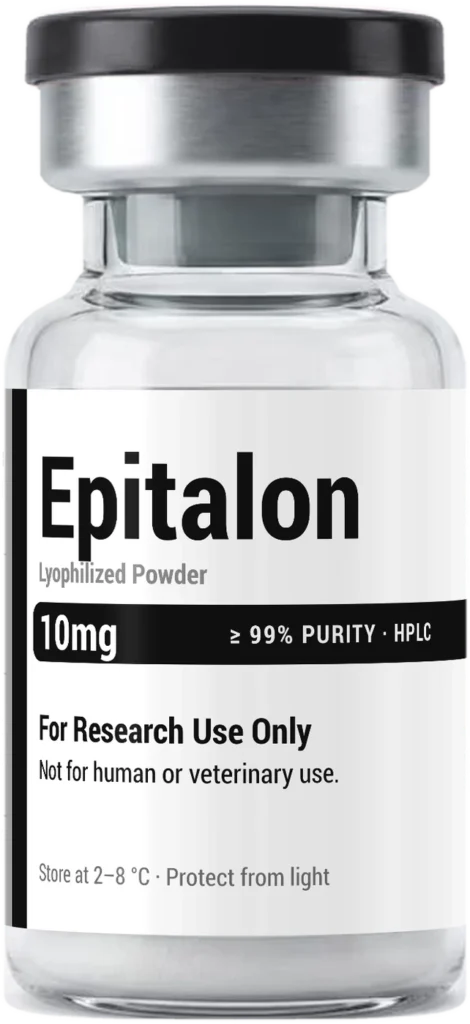
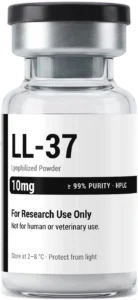
Vial label design and print may vary between batches. Product specifications remain unchanged.
At a glance
Strength
10mg per vial
Form
Lyophilised powder
Purity
≥ 99% (HPLC)
CAS number
307297-39-8
Molecular weight
390.35 g/mol
Certificate of Analysis
Batch ET-10-11 · Prime Peptides UK
Cellular & mitochondrial
Epitalon
Synthetic research peptide · 10mg · CAS 307297-39-8
£14.95 In stock · ready to shipper vial · £1.49 per mg
Epitalon 10mg is coming soon. It goes on sale as soon as its batch certificate is published - every vial we sell has a matching CoA.
Bank transferBitcoin Encrypted checkout · card details are never taken on this site
Multi-item discount. Add any 2 items for 4% off the whole order, 7% at 3, 10% at 4. Applied automatically at checkout.
Part of a stack. Epitalon is in the Longevity & Cellular Stack (Epitalon 10mg · NAD+ 500mg · MOTS-c 10mg).
Free
Free lab add-on. Bacteriostatic water is included with every peptide order at no extra cost.
Lab essentials tap to add to this order
RUOResearch Use Only. Not for human or veterinary use. By purchasing you confirm you are a qualified researcher and accept responsibility for safe, lawful handling.
Same-day dispatch
Orders before 3:00 PM leave the same working day, tracked, in plain packaging. Free UK delivery over £200.
Secure payment
Bank transfer or Bitcoin over an encrypted checkout. No card details are stored or handled on this site.
Batch tested
Every batch is HPLC and mass spectrometry tested, and its certificate is published before it ships.
Epitalon 10mg≥99% HPLC · In stock
£14.95
Compound Overview
What Is Epitalon 10mg?
Epitalon 10mg is a laboratory research form, a synthetic tetrapeptide Epitalon or Epithalon. The compound, which is composed of four amino acids (Ala-Glu-Asp-Gly), has garnered scientific curiosity in experimental studies on cellular ageing, telomere biology, gene regulation and oxidative processes. This 10mg format is used to indicate the amount of research material supplied and is for use in controlled laboratory investigations only.
Epitalon is a short synthetic peptide consisting of alanine, glutamic acid, aspartic acid and glycine. It is often shortened to AEDG. The compound was synthesised in connection with peptide research with pineal preparations and has since been used in laboratory studies of various aspects of cellular biology.
Epitalon has a short peptide sequence of just four amino-acid residues, whereas larger peptide chains would have more. The simplicity of this structure has led to its use as a model compound in studies of the interaction of short peptides and cell processes.
The word 'Epitalon 10mg' is used exclusively in relation to a product in which Epitalon is included as the component of a research sample. The figure does not represent a recommended dose, concentration for administration or indication of clinical effectiveness. On the contrary, it refers to the quantity provided in the laboratory product format.
An important difference between the amount of product and the experimental concentration matters for researchers from the UK who are testing Epitalon 10mg. The experimental design, analytical methodology and laboratory procedures dictate the treatment of research material in a specific study.
Technical Data
Epitalon Product Specifications
Technical Specification Sheet
EPITALON · 10MG · RUO
Product Name
Epitalon 10mg
Alternative Name
Epithalon
Compound Type
Synthetic tetrapeptide
Amino-Acid Sequence
Ala-Glu-Asp-Gly (AEDG)
Molecular Formula
C14H22N4O9
Molecular Weight
390.35 g/mol
Strength
10mg research material
Research Classification
Experimental research peptide
Format
Laboratory research product
Testing Documentation
Refer to the applicable batch Certificate of Analysis
Intended Use
Laboratory and scientific research only
Human Use
Not intended for human consumption or administration
CAS Number
307297-39-8
Purity
≥99% by HPLC
Researchers should consult the product label, batch documentation and relevant laboratory procedures before storage or analytical handling.
The Science
Scientific Background of Epitalon
Epitalon has an unusual research history compared with many longer synthetic peptides. It was synthesised on the basis of the amino-acid composition associated with Epithalamin, a peptide preparation originally obtained from bovine pineal tissue. The resulting AEDG tetrapeptide has since been investigated using cell cultures, animal models and other experimental systems.
One of the better-known areas of Epitalon research concerns telomere biology. Earlier laboratory studies reported changes in telomerase activity and telomere length in cultured human somatic cells. More recent cell-line research has continued to investigate relationships between Epitalon, hTERT expression, telomerase activity and alternative telomere-lengthening mechanisms.
Other experimental literature has explored oxidative processes, mitochondrial activity, gene expression, chromatin organisation and neuroendocrine pathways.
Research Context
These findings provide research questions rather than established therapeutic conclusions. Much of the Epitalon literature consists of laboratory, animal or limited experimental studies, and findings from these models should not automatically be interpreted as evidence of effects in people. Epitalon therefore remains an investigational compound rather than an established UK medicine.
Laboratory Focus
Why Epitalon Continues to Attract Laboratory Interest
The small peptides can be useful experimental tools when the researcher wishes to study a very specific molecular or cellular response. The biological investigation of several different sequences around the same four-amino-acid sequence makes the case of Epitalon particularly interesting.
Ageing & Cellular Research
One is the research on Telomeres. Telomeres are repetitive DNA sequences at the ends of chromosomes and telomerase is an enzyme that helps maintain the length of the telomeres. The effects of exposure to Epitalon on a specific cell system and on telomerase-related activity have been examined in laboratory studies.
Mitochondrial Function
Epitalon has also been examined with respect to cell oxidative status and mitochondrial function. Experimental studies of chromatin modification and pathways of gene expression have been studied separately. These areas have spurred general interest in the roles that short peptides can play in the regulation of cellular and molecular processes.
Cellular Studies
Observations may, however, vary depending on model, type of cell, experimental conditions, and experimental methodology. Studies using Epitalon should thus be viewed in the context of the single experiment, and not as evidence for its anti-ageing or therapeutic activity.
Product Format
What the 10mg Format Means for Research
10mg
Nominal Research Quantity
The 10mg Epitalon research format indicates the total mass of peptide material contained in the product. This distinction is particularly relevant when comparing research peptide listings, because a vial quantity should not be confused with an experimental concentration or biological dose.
A 10mg quantity may be selected by a laboratory because its planned work requires a particular amount of starting material. Requirements can differ considerably between analytical testing, preliminary assay development, repeated experimental runs and larger laboratory projects.
For example, a researcher conducting several controlled assays may have different material requirements from a laboratory performing identity or analytical-method work. Experimental replication can also influence the quantity of material required.
Prime Peptides UK therefore presents Epitalon 10mg as a defined research-material quantity rather than recommending how the peptide should be used. Researchers remain responsible for determining appropriate experimental conditions under approved protocols, institutional procedures and laboratory SOPs.
Verification
Identity, Purity Testing and Certificate of Analysis
Documentation is a key factor to take into account when ordering Epitalon 10mg UK research products. The name of a product alone does not indicate whether the peptide belongs to a specific batch or what the results of an analysis of that product will be.
Batch-Specific CoA
Peptide analysis is often used to determine chromatographic purity using HPLC. Complementary techniques may be applied to the investigation of molecular identity or other characteristics, depending on the analytical programme. The testing documentation of the actual batch should be analysed and not the assumption that all analytical methods have been carried out.
Batch-Specific CoA
A Certificate of Analysis (COA) may contain batch level data such as product identification, batch reference, and reported analytical results which can be helpful. The precise information available should always be checked on the applicable certificate.
Documentation & Transparency
Batch traceability is important too. When the research material is linked to the analytical documentation, it also enables the laboratory to keep more accurate records and internal documentation of the research.
Any statement of purity should be based on the relevant batch testing report and no percentage should be assumed if it is not.
Handling
Storage and Laboratory Handling of Epitalon 10mg
Environmental Conditions
Environmental conditions can affect research peptides, so Epitalon 10mg should be stored as described in the product documentation provided by the supplier and in the laboratory's SOPs.
Labelling & Traceability
The material should be properly labelled and covered from all unnecessary moisture, strong light and unsuitable temperatures. It may be beneficial to have the original product identification and batch information for traceability during laboratory storage.
Contamination Control
Proper contamination control measures should also be used in the handling of peptide research materials. If temperature-controlled storage is required, the laboratory should ensure appropriate monitoring and maintain stable environmental conditions.
Reconstitution Practice
Any preparation of material for an experimental assay should follow the research protocol developed by the laboratory. The information in storage is not intended to be a prescription for preparation, injection, self-injection or human consumption.
Researchers looking for Epitalon 10mg in the UK should consider more than the stated quantity on a product listing. Clear identification of the compound, batch information, analytical documentation and transparent research-use labelling all contribute to informed sourcing.
A supplier should make it straightforward to distinguish the peptide name and quantity and, where available, connect a product with its relevant Certificate of Analysis. Appropriate packaging and storage information are also useful when research material needs to enter an existing laboratory inventory or quality-control process.
For institutions comparing laboratory peptides UK suppliers, documentation should be assessed on a batch-specific basis. Researchers should not assume that statements applying to one compound or batch automatically apply to another.
Epitalon 10mg supplied by Prime Peptides UK is positioned as laboratory research material and not as a medicinal, diagnostic or consumer product.
Analytical Records
Batch certificates for Epitalon
Every order ships with the CoA matched to its batch number, and the analytical records
are published here - open the certificate before you order, or cross-check the one in
your parcel.
What exactly is contained in a Epitalon 10mg research format?
The 10mg designation describes the total mass of Epitalon research material supplied. Epitalon itself is the tetrapeptide Ala-Glu-Asp-Gly, abbreviated AEDG. The 10mg figure should not be interpreted as a human dose, recommended experimental concentration or statement about effectiveness. Laboratories determine material requirements according to their own research protocols and analytical objectives.
Is Epitalon the same as Epithalon?
Epitalon and Epithalon are names commonly used for the AEDG tetrapeptide in scientific databases and literature. When comparing research materials, laboratories should nevertheless verify the chemical identity and associated documentation rather than relying solely on naming conventions. Product labels, sequence information, batch references and analytical records provide more useful confirmation of identity.
What areas of research have examined Epitalon?
Published experimental work has examined Epitalon in areas including telomerase activity, telomere biology, cellular ageing models, gene regulation, chromatin organisation, oxidative processes and mitochondrial function. The evidence base includes in-vitro and animal research, with limitations in the extent and quality of clinical evidence. Laboratory findings should therefore not be presented as established health benefits.
Why might a laboratory choose a 10mg quantity?
Research-material requirements vary with study design. A laboratory may need material for multiple assays, analytical evaluations, replication work or a defined experimental programme. The availability of a 10mg format gives researchers a clearly identified quantity from which they can plan according to their protocols. It does not imply that 10mg is preferable to another quantity for any biological purpose.
What information should be reviewed on an Epitalon COA?
Researchers should check that the Certificate of Analysis corresponds to the correct product and batch. Relevant information may include the compound identity, batch or lot reference, analytical method and reported test results. Where chromatographic purity is reported, laboratories should review the actual result and methodology rather than relying on a general marketing statement about peptide quality.
Can Epitalon 10mg be used by people?
No. This product is a research grade (Epitalon 10mg) and is not for the use of the body, for self-administration or therapeutic purposes. Experimental results obtained with cells or animal models are not sufficient to prove safety or efficacy in humans. Product information is not intended to be medical advice and should not be used as such or a recommendation for health use of Epitalon.
PG
Medically & Scientifically Reviewed By
Dr. Priyanka Goel
Scientific & Medical Content Reviewer
Reviews research content against current published literature and UK regulatory guidance, ensuring compound information is accurate, referenced and presented for research use only.
Epitalon 10mg is intended solely for the use of controlled laboratory and scientific investigation. It should not be used for human consumption, self-administration, diagnostic or therapeutic purposes. References to published research do not make clinical claims of safety and effectiveness. This information is for research-product and education only.