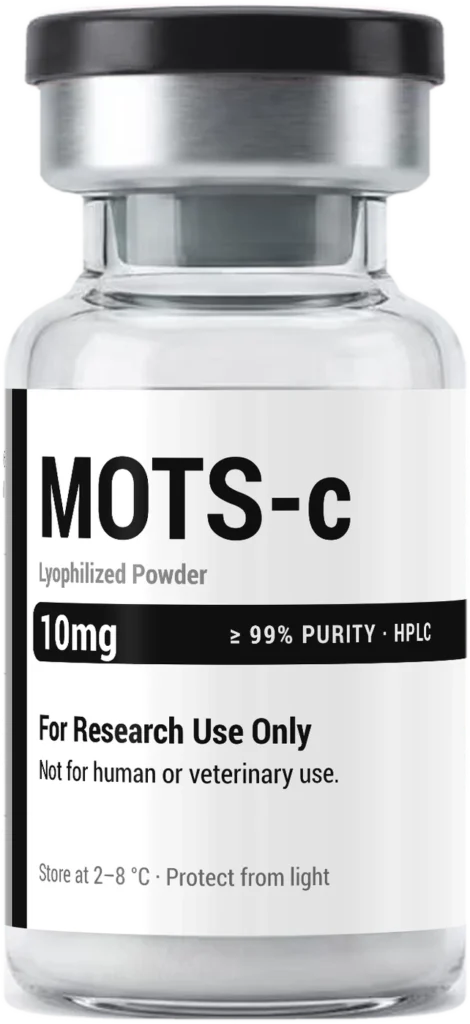
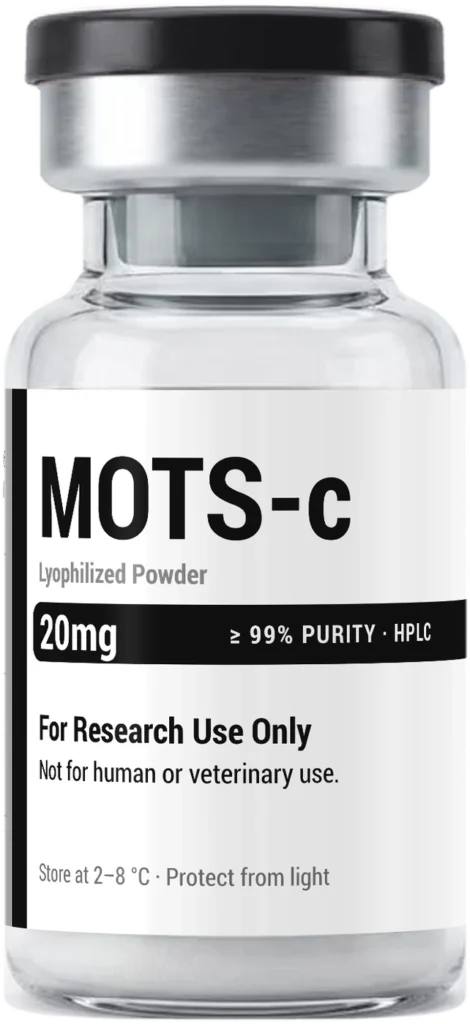
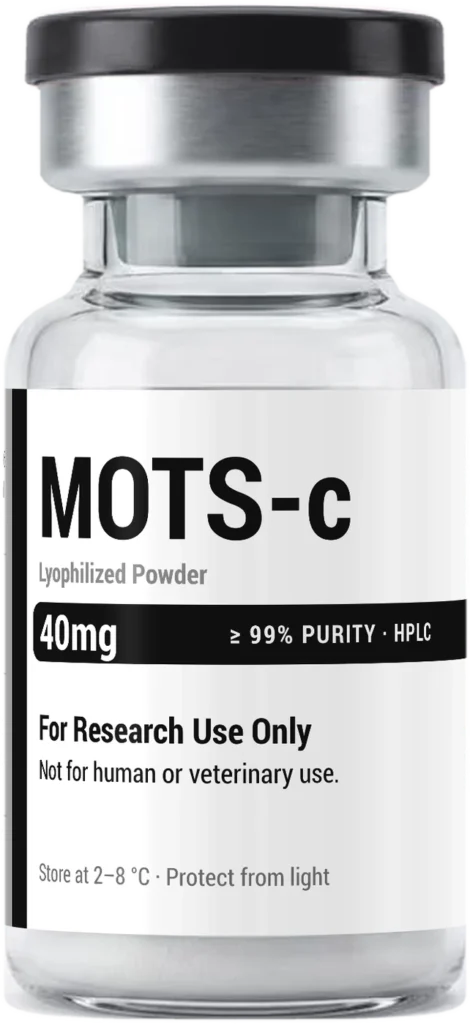
Vial label design and print may vary between batches. Product specifications remain unchanged.
At a glance
Strength
10mg per vial
Form
Lyophilised powder
Purity
≥ 99% (HPLC)
CAS number
1627580-64-6
Molecular weight
2174.6 g/mol
Certificate of Analysis
Batch MS-10-21 · Prime Peptides UK
Storage
Follow product documentation and established laboratory procedures
Cellular & mitochondrial
MOTS-c
Synthetic research peptide · 10mg · CAS 1627580-64-6
£24.95 In stock · ready to shipper vial · £2.50 per mg
Choose strengthPrice per vial
MOTS-c 10mg is coming soon. It goes on sale as soon as its batch certificate is published - every vial we sell has a matching CoA.
Bank transferBitcoin Encrypted checkout · card details are never taken on this site
Multi-item discount. Add any 2 items for 4% off the whole order, 7% at 3, 10% at 4. Applied automatically at checkout.
Part of a stack. MOTS-c is in the Longevity & Cellular Stack (Epitalon 10mg · NAD+ 500mg · MOTS-c 10mg).
Free
Free lab add-on. Bacteriostatic water is included with every peptide order at no extra cost.
Lab essentials tap to add to this order
RUOResearch Use Only. Not for human or veterinary use. By purchasing you confirm you are a qualified researcher and accept responsibility for safe, lawful handling.
Same-day dispatch
Orders before 3:00 PM leave the same working day, tracked, in plain packaging. Free UK delivery over £200.
Secure payment
Bank transfer or Bitcoin over an encrypted checkout. No card details are stored or handled on this site.
Batch tested
Every batch is HPLC and mass spectrometry tested, and its certificate is published before it ships.
MOTS-c 10mg≥99% HPLC · In stock
£24.95
Compound Overview
What is MOTS-c 10mg?
MOTS-c 10mg is a laboratory research grade of a short mitochondrial-derived peptide (MOTS-c) which has garnered scientific interest due to its association with cellular metabolism, mitochondrial signalling and responses to metabolic stress. MOTS-c is a peptide derived from a short open reading frame in the mitochondrial DNA, which is different from most peptides that are encoded by nuclear DNA. This 10mg format ensures a specific amount of research material for suitably designed lab investigations. It is intended for scientific and laboratory purposes only and not for personal use, self-medication or medical treatment.
MOTS-c is the short form of the mitochondrial open reading frame of the 12S rRNA type-c. It is a naturally occurring mitochondrial-derived peptide of 16 amino acids. Discovery helped shift the perception of scientists over how mitochondria work, from simply being organs for making energy to also producing signalling molecules that can play a role in communication between the mitochondria and surrounding cellular systems.
The gene for MOTS-c is located in the mitochondrial 12S rRNA region (MT-RNR1). Experimental studies have investigated the role this peptide can play in metabolic regulation, cellular stress response and communication between mitochondria and the nucleus.
The peptide research material in the product format is called MOTS-c 10mg. The dosage of 10mg is not intended to suggest a recommended dose or quantity to administer. It is strictly laboratory relevant, so that the quantity of material can be determined as part of the planning of the appropriate experimental or analytical work.
Sizes & Prices
MOTS-c sizes and prices
Each size is supplied from its own tested batch with its own Certificate of Analysis. The size is the amount of research material in the vial; larger vials cost less per mg.
Size
Price
Per mg
Batch certificate
Choose
10mg
£24.95
£2.50
MS-10-21
20mg
£34.95
£1.75
MS-20-21
40mg
£54.95
£1.37
MS-40-21
Technical Data
MOTS-c Product Specifications
Technical Specification Sheet
MOTS-C · RUO
Product Name
MOTS-c
Compound
MOTS-c
Peptide Type
Mitochondrial-derived peptide
Strength
10mg, 20mg, 40mg per vial
Peptide Length
16 amino acids
Research Classification
Experimental research peptide
Intended Use
Laboratory and scientific research only
Human Use
Not intended for human consumption or self-administration
Documentation
Check the relevant batch documentation/COA supplied with the product
Storage
Follow product documentation and established laboratory procedures
Researchers should consult the batch-specific product documentation for analytical information rather than assuming that specifications from another MOTS-c product or batch apply.
The Science
The Scientific Background of MOTS-c 10mg
MOTS-c became particularly interesting to researchers following work that identified it as a mitochondrial-encoded signalling peptide. Its existence adds to evidence that mitochondrial DNA contains biologically meaningful short open reading frames beyond the genes traditionally associated with mitochondrial function.
Laboratory studies have investigated MOTS-c in relation to cellular energy balance and metabolic homeostasis. One area receiving considerable attention is its interaction with pathways associated with AMP-activated protein kinase, commonly abbreviated to AMPK. AMPK functions as an important cellular energy sensor and responds when cellular energy availability changes.
Research has also examined the ability of MOTS-c to relocate to the nucleus under certain forms of metabolic stress. This has led scientists to investigate whether it forms part of a wider communication system through which mitochondrial conditions can influence nuclear gene expression.
These findings provide useful experimental hypotheses rather than established therapeutic conclusions. A substantial proportion of MOTS-c evidence has come from cellular and animal models, so observations from these systems should not automatically be translated into effects in humans.
One of the most intriguing aspects of MOTS-c research is the ability of mitochondria to communicate with the nucleus. Experimental results suggest that metabolic stress may affect the localisation of MOTS-c in the cell, such as translocation to the nucleus where its role in stress responsive gene expression has been studied.
The folate-AICAR-AMPK pathway is another key research priority. Experimental studies have linked MOTS-c to alterations in folate metabolism and purine biosynthesis, the abilities of which may affect AMPK signalling. This will offer a mechanism for investigating the interplay of mitochondrial-derived signals with cellular energy-sensing pathways.
As a result, MOTS-c has been studied in various models with regard to metabolic homeostasis, exercise-related cellular responses, ageing and stress adaptation.
This wide range of research does not imply that all proposed mechanisms are in place. Biological pathways often engage in many other regulatory pathways and effects may differ by experimental model, tissue, methodology and study design. Further studies are needed to determine the peptide's functions and their significance in various biological systems.
Laboratory Focus
Why Is MOTS-c 10mg Studied in Laboratory Research?
A factor that makes MOTS-c interesting is that it has an unusual biological origin. Although mitochondria are intimately linked to energy production in the cell, mitochondrial peptides indicate that they are more directly involved in signalling and adaptive responses.
Mitochondrial Function
Experimental models have been used to explore MOTS-c in the context of glucose, insulin sensitivity, skeletal muscle biology and metabolic stress. In the early laboratory studies, skeletal muscle was recognised as a critical tissue in the studies of metabolic effects of MOTS-c. Other studies have investigated cellular pathways related to oxidative stress, inflammation, ageing and mitochondrial homeostasis.
Neurological Pathways
The peptide has thus found application in the study of other issues related to cell recognition and metabolism.
Interpreting Results
Researchers approach these research areas with caution. If MOTS-c is found to impact a pathway or biological process in an experimental model, such a finding does not constitute evidence that a MOTS-c research product prevents, treats or improves a medical condition. Laboratory findings, animal research and clinical evidence represent different types of scientific evidence and need to be clearly distinguished.
Product Format
Understanding the MOTS-c 10mg Research Format
10mg
Nominal Research Quantity
The 10mg in MOTS-c 10mg identifies the total nominal quantity of research material presented in the product format. It does not describe a clinical strength and does not establish an appropriate amount for administration to people or animals.
Having a clearly identified quantity is important in laboratory procurement because experimental requirements vary. A research group conducting analytical characterisation may have different material requirements than a laboratory running multiple controlled assays. Study scale, number of experiments, analytical methodology, controls and laboratory protocols can all influence the quantity of research material required.
For this reason, researchers evaluating MOTS-c 10mg UK products should treat the strength primarily as a procurement and experimental-planning specification.
Any calculations involving research material should be determined by qualified researchers according to their validated experimental protocol, institutional procedures and relevant laboratory standards. The 10mg format itself does not constitute a dosing recommendation or experimental-use instruction.
Verification
Quality Testing, Identity and Certificate of Analysis
When sourcing MOTS-c for laboratory investigation, consider the importance of analytical documentation. Scientists should be able to tell the difference between the name of the product that is listed on a web page and evidence from the actual batch of material being provided.
Batch-Specific CoA
A Certificate of Analysis can provide useful data on a specific batch. Depending on the work to be done with the product, the documentation may include product identity, batch reference, purity measurements, and/or results from analyses such as high-performance liquid chromatography (HPLC) and mass spectrometry.
HPLC Analysis
These techniques provide solutions to various analytical questions. Assessment of composition and relative purity of a sample can be performed with HPLC and molecular identity can be assessed with mass spectrometry.
Identity vs Purity
Researchers should take a look at what testing has actually been done instead of just taking the purity word for it from the headline. If Prime Peptides UK provides analytical documentation in batches then the relevant COA shall be considered for the specific batch results.
Handling
Storage and Laboratory Handling
Environmental Conditions
Research peptides can be sensitive to environmental conditions, so storage should be based on the requirements stated in the supplier's documentation for the specific product.
Contamination Control
MOTS-c research material should remain appropriately labelled and protected from avoidable contamination, excessive moisture, inappropriate temperature conditions and unnecessary light exposure where required by its product documentation. Laboratories should also maintain clear identification and traceability when receiving and storing research compounds.
Laboratory Research
Researchers should follow their institution's standard operating procedures alongside any storage information accompanying the material.
Reconstitution Practice
This information concerns the laboratory management of research material only. It is not guidance for preparing MOTS-c for injection, consumption or other human administration.
Researchers must take a deeper look at more than just the product name and quantity when comparing MOTS-c 10mg UK suppliers. Identification, batch information, analytical documentation, storage information and transparent research-use restrictions can all help laboratories make better-informed procurement decisions.
An effective product listing should clearly differentiate the quantity of 10mg and offer access to documentation if applicable. Researchers can also determine if analytical results are from a specific batch or a generic/historical sample.
Sourcing from the UK can ensure easy communication and domestic fulfilment for UK labs, but not every UK product is the best.
If you are interested in purchasing MOTS-c 10mg UK for legitimate laboratory use, it is important to consider the available documentation and product information as well as your institution's procurement needs before ordering research material.
Analytical Records
Batch certificates for MOTS-c
Every order ships with the CoA matched to its batch number, and the analytical records
are published here - open the certificate before you order, or cross-check the one in
your parcel.
The 10mg designation identifies the quantity of MOTS-c research material supplied in that particular product format. It is a product specification rather than a recommended dose. Laboratories may require different quantities according to their experimental design, number of assays, analytical methodology and research protocol.
What makes MOTS-c different from many other research peptides?
MOTS-c is unusual because its sequence originates from mitochondrial DNA. It is a 16-amino-acid mitochondrial-derived peptide encoded within the 12S rRNA region. This unique origin has made MOTS-c particularly interesting for research that examines mitochondrial signalling and the communication between mitochondrial activity and broader cellular responses.
What areas of MOTS-c research are currently being investigated?
Published research has examined MOTS-c in experimental contexts involving cellular metabolism, metabolic stress, skeletal muscle, glucose regulation, AMPK signalling, inflammation, exercise and ageing-related biology. Much of the evidence supporting proposed biological effects remains preclinical, so experimental findings should not be presented as established benefits in humans.
Is MOTS-c 10mg a medicine?
This MOTS-c 10mg product is positioned as laboratory research material, not as a medicine or consumer health product. It should not be marketed or interpreted as a treatment for metabolic disease, ageing, obesity or any other medical condition. Research findings involving MOTS-c do not themselves establish an approved therapeutic use.
What should I look for in a MOTS-c COA?
Researchers should check whether the Certificate of Analysis identifies the relevant compound and batch and clearly reports the analytical tests undertaken. Depending on the testing programme, this may include chromatographic purity information and identity-related analyses. Results should be interpreted according to the actual analytical method rather than relying on a purity percentage in isolation.
Why might a laboratory select a 10mg research format?
A 10mg format provides a defined amount of research material that can be considered during experimental planning and procurement. Whether that quantity is appropriate depends on the laboratory's study design, analytical procedures, number of planned experiments and internal protocols. It should never be interpreted as guidance regarding human or animal administration.
PG
Medically & Scientifically Reviewed By
Dr. Priyanka Goel
Scientific & Medical Content Reviewer
Reviews research content against current published literature and UK regulatory guidance, ensuring compound information is accurate, referenced and presented for research use only.
MOTS-c 10mg is provided only for the purpose of scientific investigation and research in a laboratory setting. This product is not intended for human consumption, personal use, diagnosis, or therapeutic purposes. Any statements about biological pathways or published studies would refer to what the current field of study is and not imply medical benefit. Laboratory procedures and institutional requirements and product-specific documentation should be followed when handling and storing by researchers.