
That wider activity is one reason MT-2 has attracted research interest. It is also the reason the compound should not simply be treated as a tanning peptide.
What is Melanotan-2?
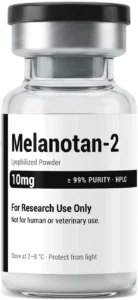
MT-2 is a cyclic heptapeptide analogue of α-MSH. The molecule was developed as part of research into melanocortin biology, particularly the mechanisms involved in melanin production and melanocortin receptor activity.
Early human research looked at whether the peptide could increase skin pigmentation without the need for conventional ultraviolet exposure. A small Phase I study published in 1996 reported increased pigmentation in participants after administration of MT-2. The study was tiny, involving only three healthy men, so its findings were useful as an early pharmacological signal rather than evidence of long-term safety or effectiveness.
The same early research also highlighted something that makes MT-2 unusual. Participants experienced effects outside pigmentation, including yawning, fatigue, nausea and spontaneous erections. These observations helped lead to later studies examining melanocortin signalling and sexual function.
How does it work?
The main research interest is directed toward melanocortin receptors. The melanotropin pathways in melanocytes can be stimulated to increase the production of melanin, especially of the darker eumelanin.
MT-2 is not very selective for a single biological effect, however. Its action on melanocortin receptors can also have effects on other systems. This helps to explain why the compound has been investigated in fields as diverse as pigmentation and sexual physiology.
Clinical research from the late 1990s and early 2000s found that MT-2 could produce erections in some men, including in situations where sexual stimulation was not present. In one controlled study involving men with erectile dysfunction, erections were observed in most participants receiving MT-2, while nausea and yawning were among the more commonly reported adverse effects.
For research purposes, this is an important distinction: the pigmentation response is only one part of the peptide’s pharmacological profile.
What has research actually shown?
The human evidence base for Melanotan-2 is relatively small and dates largely from early clinical investigations.
The initial Phase I work demonstrated that MT-2 could produce measurable changes in pigmentation. It also indicated that physiological effects could appear relatively quickly, including nausea, tiredness and spontaneous penile erections.
Subsequent clinical research examined the peptide’s effects on erectile function. These studies provided evidence that melanocortin receptor activation can influence sexual responses, although the studies were small and were not designed to establish MT-2 as a modern, approved treatment.
There is another part of the evidence that matters just as much: reports of adverse events. A published case report described systemic toxicity after an individual injected Melanotan-2 purchased online. The patient developed marked sweating, anxiety, rapid heart rate, muscle symptoms and rhabdomyolysis, alongside temporary kidney dysfunction. The report does not establish how frequently such an event occurs, but it demonstrates that serious toxicity has been reported.
Melanotan-2 and skin pigmentation
Pigmentation is probably the feature most closely associated with MT-2. Unlike a conventional tanning product applied to the skin, the peptide acts through melanocortin signalling and can stimulate melanogenesis.
That does not make it a substitute for sensible sun protection. Increased pigmentation should not be interpreted as proof that skin has become protected from ultraviolet radiation.
There have also been published case reports involving suspicious or malignant melanocytic lesions following Melanotan-2 use. One report described a melanoma occurring alongside MT-2 use and sunbed exposure. More recently, a 2025 case report described oral mucosal melanoma in a person who had used a Melanotan-2 nasal spray. These reports are important signals for researchers, but they do not by themselves prove that MT-2 causes melanoma.
Product quality is another research concern.
There is a practical problem with studying compounds obtained through unofficial channels: the labelled contents cannot necessarily be assumed to match the material inside the vial.
Analytical research examining Melanotan-2 products purchased from online sellers found differences between labelled and measured quantities, along with unidentified impurities in some samples. In one investigation, products claiming to contain 10 mg of MT-2 contained substantially different amounts when analysed.
For laboratory research, such variability matters enormously. Results obtained with a characterised reference material cannot automatically be applied to an unverified product obtained from an online source.
UK regulatory position
Melanotan-2 should not be confused with licensed melanocortin medicines such as afamelanotide. They are different compounds with different regulatory and clinical contexts.
The UK Medicines and Healthcare Products Regulatory Agency (MHRA) has stated that Melanotan-2 products falling within the definition of a medicinal product are unlicensed. The agency has also issued a warning that the safety, quality, and effectiveness of these products do not meet the standards expected of authorised medicines. MHRA records show suspected adverse drug reaction reports associated with Melanotan-2, while also noting that a Yellow Card report does not establish that the product caused the reported event.
This distinction is particularly relevant when reading material online. Availability for purchase is not the same thing as regulatory approval, and internet descriptions should not be treated as clinical evidence.
Current research perspective
Melanotan-2 remains an interesting compound from a pharmacological perspective because it demonstrates how melanocortin signalling can affect more than one physiological pathway. Research into the peptide helped illustrate connections between pigmentation, melanocortin receptors and sexual responses.
At the same time, the human evidence remains limited compared with that available for approved medicines. Much of the original clinical work involved small groups, while later evidence includes case reports and analytical studies of products from unofficial sources.
For that reason, MT-2 is best viewed as an experimental melanocortin peptide with a distinctive research history rather than as an established tanning or therapeutic product. While its effects on pigmentation and other melanocortin-mediated pathways are scientifically interesting, significant questions remain regarding long-term safety, product quality, and clinical use.
Published batch records
Every batch of Melanotan-2 we have sold, each with its published Certificate of Analysis.
| Batch | Size | Purity (HPLC) | Tested | Certificate |
|---|---|---|---|---|
| MT2-10-20 Current stock | 10mg | ≥99.0% | Oct 2026 | View CoA |
Research Use Only. Melanotan-2 is supplied strictly for laboratory research. Nothing on this page is dosing guidance, medical advice, or a suggestion of human or veterinary use.