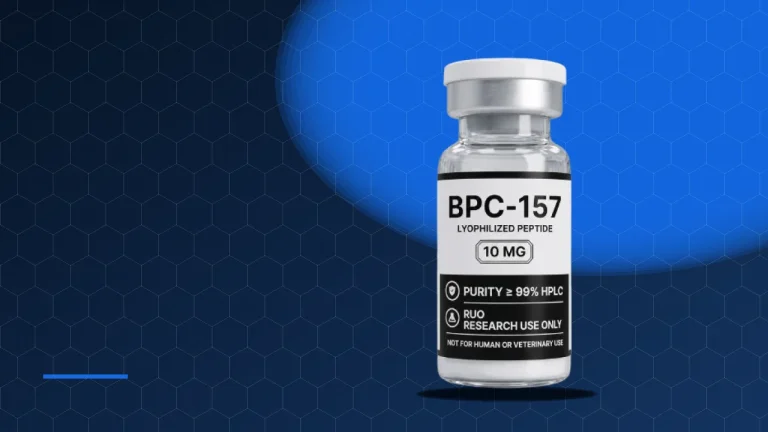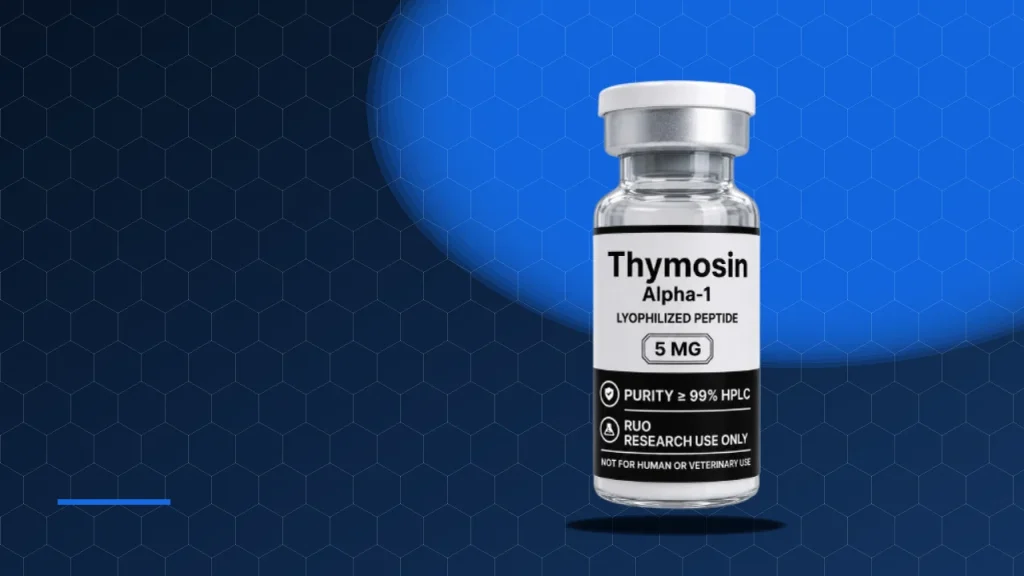
- “Research Use Only” is a statement about the purpose of supply: the material is sold for laboratory and analytical work, not as a medicine.
- An RUO compound is not a licensed medicinal product. It has not been assessed for safety, quality or efficacy in humans by the MHRA, and it is not manufactured to pharmaceutical GMP.
- The obligations run both ways: the supplier must describe the product accurately and not imply human use; the buyer confirms the purchase is for research.
- In practice, RUO is a documentation and conduct standard – what is written on the label, the website, the invoice and in the lab notebook.
Almost every research peptide sold in the UK carries the phrase “Research Use Only” – on the vial, on the product page, at checkout. It is easy to read as boilerplate. It is not. The phrase defines the legal category the product sits in, what the supplier is and is not permitted to say about it, and what the buyer is confirming when they order. This article explains what RUO means for a UK laboratory in concrete terms.
What the category actually means
A medicinal product in the UK is regulated by the Medicines and Healthcare products Regulatory Agency (MHRA) under the Human Medicines Regulations 2012. To be sold as a medicine, a product needs a marketing authorisation, which in turn requires evidence of safety, quality and efficacy, manufacture to Good Manufacturing Practice and controlled labelling.
A research-use-only compound is supplied outside that framework. It is sold as a chemical reagent for use in laboratory investigation – analytical method development, in-vitro assays, receptor-binding studies, stability work, and so on. It has none of the assurances that come with a medicine, and it is not permitted to be presented as if it had. That is the substance of the label.
What RUO does not mean
Three misreadings come up repeatedly:
- It does not mean “lower quality”. An RUO peptide can be manufactured and tested to a very high analytical standard – a Certificate of Analysis showing ≥99% purity by HPLC with identity confirmed by mass spectrometry is a rigorous quality statement. What it lacks is pharmaceutical qualification: sterility assurance, endotoxin limits, GMP batch release, clinical evidence.
- It does not mean “unregulated”. The supplier is bound by consumer protection, advertising and product-description law. Describing an RUO product with health claims, dosing information or suggestions of human use can make it a medicine by presentation – and that is where enforcement action tends to arise.
- It does not mean “a disclaimer that excuses anything”. A label cannot convert a product marketed for human consumption into a research reagent. Regulators look at the whole presentation: website copy, imagery, forum activity, packaging and invoices.
What a compliant supplier does
From the buyer’s side, the behaviour of the supplier is the clearest indicator of whether RUO is being taken seriously. A compliant supplier will:
| Practice | What to look for |
|---|---|
| Accurate product description | Compound name, CAS number, sequence or formula, quantity and purity – with no therapeutic claims, dosing or “benefits” language. |
| Batch-specific analysis | A Certificate of Analysis for each batch, from an identifiable laboratory, matching the batch number on the label. |
| RUO on every surface | Vial label, product page, checkout confirmation and invoice all state the research-use condition of supply. |
| Purchaser confirmation | An explicit acknowledgement at checkout that the purchase is for laboratory research and not for human or veterinary use. |
| No consumption guidance | Handling and storage information is appropriate; injection technique, dosing schedules or “protocols” are not. |
What the purchasing laboratory confirms
When an order is placed, the buyer is making a statement too: that the material is being acquired for research, that it will be handled in a laboratory context, and that it will not be administered to people or animals outside an appropriately approved study. In practice this is supported by ordinary good laboratory conduct – controlled storage, batch records, labelled reconstituted solutions, and the material being used for the analytical or in-vitro purpose it was bought for.
RUO is not a line a supplier prints and a buyer ignores. It is a shared condition of supply, and it is only meaningful when both sides behave as if it were true.
Why documentation is the practical expression of RUO
Because the category is defined by purpose rather than by a physical property of the compound, it is demonstrated through records. For the supplier, that means product pages, certificates and invoices that consistently describe a laboratory reagent. For the laboratory, it means notebooks that show the material entering and being used in research. If either side were ever asked to show that a compound was research material, the paperwork is the answer – which is one more reason batch-specific documentation matters.
In short
“Research Use Only” tells you what a product is for and what it is not. It is not a licensed medicine, it has not been assessed for human use, and it must not be presented as if it had been. It is also not an excuse for low standards – the best RUO suppliers publish more analytical evidence per batch than many consumer products ever do. Read the label as a description of the relationship between supplier and laboratory, and hold both sides to it.
Frequently asked questions
Is an RUO peptide the same as a medicine?
No. A medicine holds an MHRA marketing authorisation with evidence of safety, quality and efficacy and GMP manufacture. An RUO compound is supplied as a laboratory reagent outside that framework and has none of those assurances.
Does Research Use Only mean lower quality?
No. It means no pharmaceutical qualification - sterility assurance, endotoxin limits, GMP release. Analytical quality can still be very high; a batch CoA showing HPLC purity and MS identity is rigorous evidence.
Can a supplier provide dosing or protocol information for an RUO product?
Providing dosing, injection guidance or therapeutic claims can make a product a medicine by presentation. A compliant supplier limits information to handling, storage and analytical data.
What am I confirming when I tick the RUO box at checkout?
That the material is being acquired for laboratory research, will be handled in that context, and will not be administered to people or animals outside an appropriately approved study.
How is RUO status demonstrated if questioned?
Through records: the supplier's product descriptions, certificates and invoices describing a laboratory reagent, and the laboratory's notebooks showing the material used in research.
Reviews research content against current published literature and UK regulatory guidance, ensuring compound information is accurate, referenced and presented for research use only.
Research Use Only. This article is written for laboratory and analytical contexts. Nothing here is dosing guidance, medical advice, or a suggestion of human or veterinary use. All products are supplied strictly for research purposes.